About Me
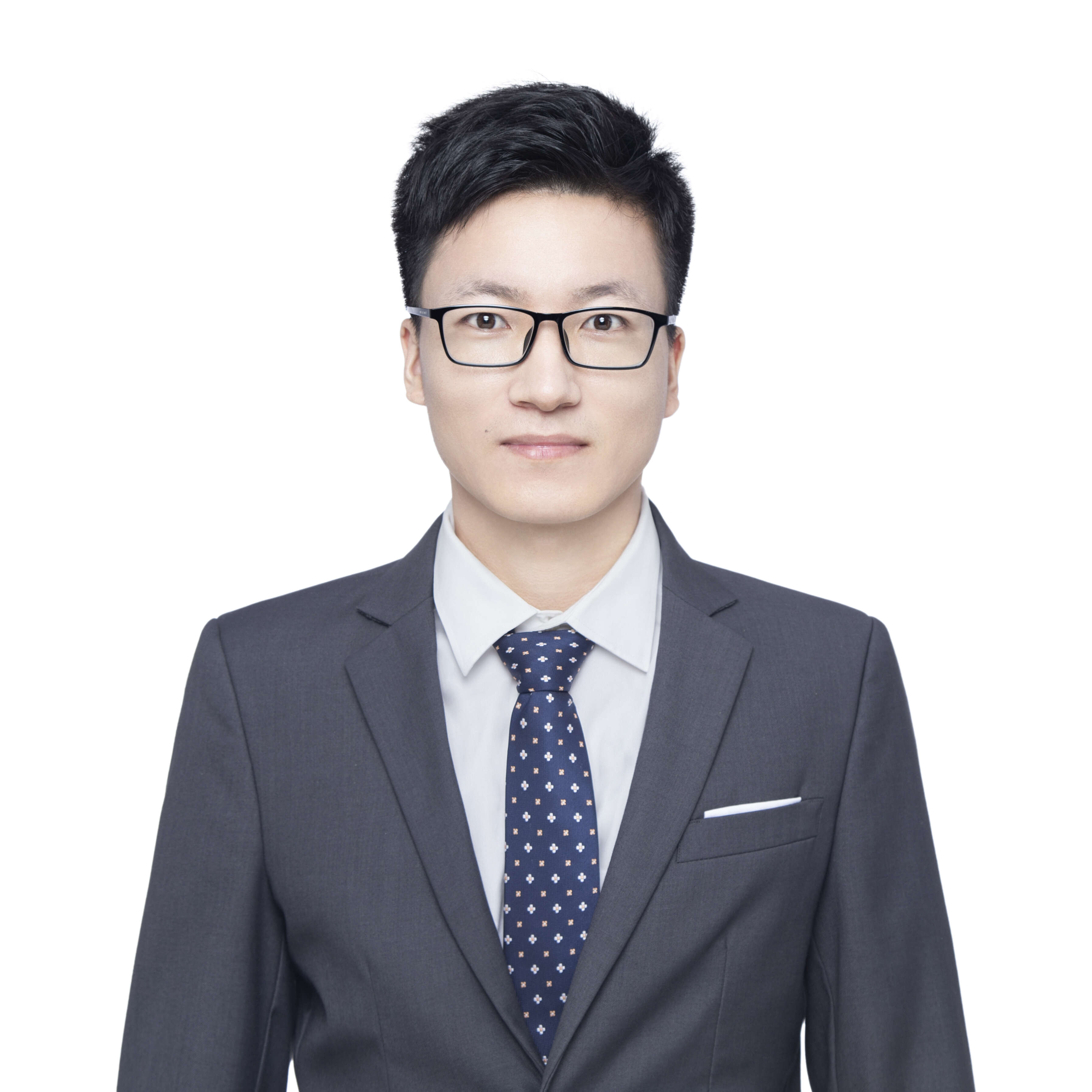
Dr. Weisong Wen is an Assistant Professor at the Department of Aeronautical and Aviation Engineering, The Hong Kong Polytechnic University, and the Director of the Trustworthy AI and Autonomous Systems Laboratory (TAS Lab). He is also a member of IEEE and the Institute of Navigation (ION). Dr. Wen aims to build algorithm foundations for embodied AI that enable trustworthy perception, navigation, and control of autonomous systems. In particular, he aims to develop practical embodied AI-driven autonomous systems (drones, intelligent vehicles, and humanoid robots) with end-to-end learning and safety certification capabilities, enabling them to perceive, reason, and interact with the physical world safely and reliably for the future society.
Dr. Wen received a BEng degree in Mechanical Engineering from Beijing Information Science and Technology University (BISTU), Beijing, China, in 2015, and a MEng degree in Mechanical Engineering from the China Agricultural University (CAU), in 2017. After that, he received a PhD degree in Mechanical Engineering from The Hong Kong Polytechnic University (PolyU) supervised by Dr. Li-ta Hsu (He is also my Lifelong Mentor), in 2020. He was also a visiting PhD student with the Faculty of Engineering, University of California, Berkeley (UC Berkeley) in 2018, supervised by Dr. Zhan and Prof. Tomizuka. For more details, please refer to my CV CV-Dr. Weisong Wen.
He has published more than 62 SCI journal papers and 56 conference papers (total citations: 2,600+, h-index: 27) in the field of GNSS (ION GNSS+) and navigation for robotic systems (IEEE ICRA, IEEE ITSC, IPIN, MMT, ICUAS), such as unmanned aerial vehicles (UAV) and intelligent vehicles (IV). He has secured over HK$28M in research funding as PI. He was ranked in the World’s Top 2% Most-cited Scientists by Stanford University in both 2023 and 2024. He won the Innovation Award from TechConnect 2021, the Best Presentation Award from the Institute of Navigation (ION) in 2020, the Top Cited Paper Award from NAVIGATION (Journal of ION) in 2022, and the Faculty of Engineering Research Grant Achievement Award from PolyU in 2025. He is also the Associate Editor of IEEE Transactions on Vehicular Technology (JCR Q1, IF: 7.1).
Area of Specializations
Research Interest: Large AI models for autonomous systems, AI-enabled perception, foundation models for robotics, trustworthy AI for navigation and control, intelligent drones and UAVs, AI-driven self-driving vehicles, multimodal learning for robotics.
Openings
We regularly have multiple openings for Postdoc/PhD/MPhil/RA/Internships (all year round) to work on research related to AI-driven trustworthy autonomous systems, with a focus on end-to-end autonomous UAVs and end-to-end self-driving cars. If you are a PolyU student (Undergraduate and MSc students seeking URIS or dissertation supervision) interested in working with me, feel free to drop me an email at welson.wen@polyu.edu.hk (together with your transcript and brief introduction) or walk into my office at room R820!
Postdoc/PhD/MPhil/RA Research Directions
- Embodied AI and foundation models for robotics (drones, autonomous vehicles, ground robots)
- High-precision positioning with multi-sensor fusion (LiDAR/Camera/IMU/GNSS) and integrity monitoring
- End-to-end learning for self-driving cars and autonomous UAVs
- Trustworthy and safety-certifiable AI for navigation and control
- Software-hardware co-design for efficient embodied AI systems
- Vision-language-action models and multimodal learning for autonomous systems
For more specific topics, please refer to our TAS Lab website and project page.
Application requirements: For those interested, please send the following materials to welson.wen@polyu.edu.hk:
- CV (with education background, publications, awards, and coding experience)
- Representative publications list (if any)
- A detailed research proposal (~6 pages) including abstract, background and literature review, research objectives, proposed methodology, expected outcomes, timeline, and references.
We will reply to you within one week if you are shortlisted for an interview.
For any candidate, you MUST have at least two of the following:
- A strong publication record in top-tier AI/robotics venues (e.g., NeurIPS, ICML, ICRA, IROS, CoRL, CVPR, ICCV);
- Strong capabilities in coding (proficient in C++ and/or Python, experience with PyTorch/TensorFlow/ROS);
- Awards or demonstrated excellence in robotics competitions (e.g., RoboMaster, ICRA competitions) are strongly preferred for PhD/MPhil applicants.
What We Offer
- Access to cutting-edge UAV platforms, self-driving car testbeds, and GPU computing clusters
- Collaboration with leading industry partners (Huawei, Tencent, Meituan, HONOR)
- Opportunities to publish in top AI/robotics conferences and journals
- A vibrant, diverse, and inclusive research environment with 30+ lab members
- Funding support for conference travel and research equipment
Application materials: CV + Publications/Coding portfolio + Research statement → welson.wen@polyu.edu.hk
Latest News
2025
- [02/2025] Our workshop proposal, “Robot Meets GNSS and Ranging for Seamless Autonomy”, is accepted by IEEE ICRA 2026! The workshop will be held on Friday, June 5, 2026 in Vienna. It brings together researchers working on reliable autonomy in real-world environments, focusing on sensor integration, error modeling, integrity monitoring, and certifiable optimization of ranging observations from GNSS, UWB, and other systems. The goal is to identify open problems and foster cross-domain collaboration for resilient robot navigation. TAS Lab remains at the forefront of safer, more efficient, and intelligent robotics solutions for the future. More details on the workshop page.
Previous Years
- 2024 News – Top 2% scientist, IEEE TVT Associate Editor, RGC Early Career Scheme, ITSC 2024 workshop, and more
- 2023 News – Assistant Professor appointment, Tencent collaboration, GLIO paper, Top 2% scientist, and more
- 2022 News – Meituan Research Award, UrbanNav dataset, IEEE ITSC workshop, Hannover visit, and more
- 2021 News – 5 papers at ION GNSS+, ICRA 2021, Research Assistant Professor appointment
- 2020 News – PhD thesis defense
- 2019 News – Visiting researcher collaborations
- 2018 News – UC Berkeley visit, Bay Area Robotics Symposium, industry talks